
Bathroom Renovation in the Netherlands: Costs, Process, Design and Regulations
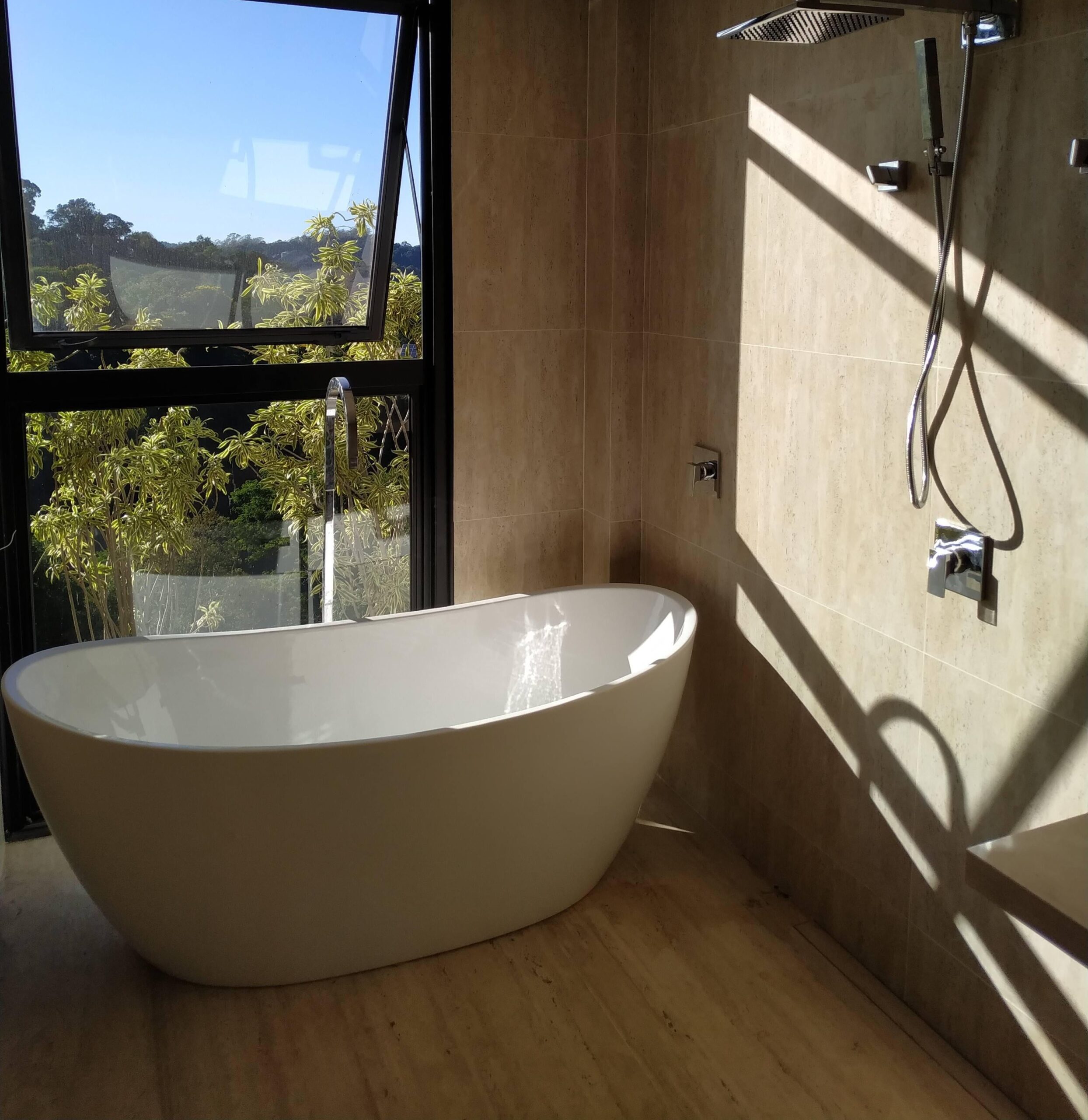
Planning a bathroom renovation in the Netherlands? Learn how much a bathroom renovation can cost, which regulations apply, how long the work may take, and what to consider when choosing materials, fixtures and a renovation contractor.
A bathroom renovation is one of the most practical ways to improve comfort, functionality and the overall condition of your home. Whether you are renovating a compact bathroom in an Amsterdam apartment, updating a family bathroom in Rotterdam, or completely redesigning a bathroom in an older Dutch house, good planning is essential.
In this guide, we cover the main steps of a bathroom renovation in the Netherlands, from design and budgeting to plumbing, ventilation, electrical work, waterproofing and final installation.
Why Renovate Your Bathroom in the Netherlands?
A bathroom is exposed to water, humidity and daily use, so even a well-maintained bathroom eventually needs updating. Renovation can solve practical problems such as poor ventilation, outdated plumbing, insufficient storage or damaged finishes while also improving the appearance of the room.
A bathroom renovation can help you:
- improve the layout and functionality of the space;
- replace outdated plumbing and electrical installations;
- improve ventilation and moisture control;
- reduce water and energy consumption;
- make the bathroom easier to clean and maintain;
- improve accessibility and safety;
- modernise the interior before selling or renting the property.
However, a bathroom renovation should not be approached as an aesthetic project alone. Technical elements such as drainage, ventilation, moisture protection and electrical safety are just as important as tiles and sanitaryware.
Bathroom Renovation Costs in the Netherlands
The cost of a bathroom renovation in the Netherlands depends heavily on the size of the room, the condition of the existing installation, the materials selected and whether you change the layout.
Current Dutch renovation price guides put a complete bathroom renovation broadly in the €5,000–€25,000+ range, with many standard projects falling somewhere in the middle of that range. Smaller or simpler renovations can cost less, while luxury bathrooms, extensive plumbing changes and structural work can push the budget considerably higher.
Typical cost drivers include:
| Renovation element | What affects the cost |
| Demolition and waste removal | Existing tiles, sanitaryware and accessibility |
| Plumbing | Whether pipes and drains remain in their current positions |
| Electrical work | Lighting, sockets, heated floors and other installations |
| Ventilation | Existing system, new extraction or upgraded ventilation |
| Tiles | Material, format, quantity and installation complexity |
| Sanitaryware | Toilet, shower, bath, basin and taps |
| Bathroom furniture | Vanity units, storage and custom-made elements |
| Waterproofing and preparation | Condition of walls and floors |
| Labour | Number and type of trades required |
| Design | Basic planning versus detailed or custom design |
One of the easiest ways to control costs is to keep the existing bathroom layout. Moving a toilet, shower or drain can require additional plumbing and construction work, which can significantly increase the budget.
Always ask for a detailed quotation that clearly separates labour, materials, demolition, waste disposal and any provisional costs.
What Should You Plan Before Renovating a Bathroom?
Before demolition starts, define the scope of the renovation.
Ask yourself:
- Do you want a cosmetic update or a complete renovation?
- Will the bathroom layout stay the same?
- Does the existing plumbing need to be replaced?
- Is the ventilation adequate?
- Do the electrical installations need updating?
- Do you want a bath, walk-in shower or both?
- How much storage do you need?
- Are accessibility or ageing-in-place requirements important?
- What is your maximum budget?
- Are there any restrictions because you live in an apartment, rental property, monument or protected area?
It is also sensible to keep a contingency amount in your budget. Once walls and floors are opened, contractors may discover old pipes, moisture damage or other problems that were not visible beforehand.
Bathroom Renovation Regulations in the Netherlands
One of the most important corrections to many online renovation guides is that not every bathroom renovation requires an omgevingsvergunning.
Whether you need a permit depends on the specific work, the property and the location. The Dutch government recommends using the Vergunningcheck in the Omgevingsloket to determine whether a permit, notification or other requirement applies. Even when a permit is not required, the work still has to comply with applicable building regulations.
A renovation may require additional checks if you:
- alter the structural layout of the property;
- remove or modify structural elements;
- change the exterior of the building;
- renovate a protected monument;
- work in a protected area;
- make changes that affect shared building elements;
- carry out work subject to specific municipal or building requirements.
For protected monuments, an omgevingsvergunning is usually required for renovation or restoration work.
The safest approach is to check the project through the Omgevingsloket before construction begins rather than assuming that a bathroom renovation is automatically permit-free.
Bathroom Renovation in an Apartment: VvE Rules
Apartment owners have an additional consideration: the VvE (Vereniging van Eigenaars).
Even if your renovation does not require an omgevingsvergunning, the VvE may have rules concerning shared building elements and installations.
Before changing a bathroom in an apartment, check the VvE regulations if the work affects:
- shared drainage or water pipes;
- ventilation ducts;
- structural floors or walls;
- shafts and service areas;
- ceilings or floors between apartments;
- other common building elements.
This is particularly important in older apartment buildings where plumbing and ventilation systems may be shared.
Renting a Home? Check With Your Landlord First
If you rent your home, do not assume that you can renovate the bathroom yourself.
According to the Dutch government, renovation or improvement of a rental property requires permission from the landlord. Bathroom modifications are specifically mentioned as an example of renovation work for which permission is required.
Before starting, agree in writing on:
- what work will be carried out;
- who pays for the renovation;
- which materials can be used;
- whether the changes must be reversed later;
- who is responsible for maintenance and repairs.
Step-by-Step Bathroom Renovation Process
A well-planned bathroom renovation usually follows a logical sequence.
1. Consultation and Site Assessment
Start with an inspection of the existing bathroom.
A professional should assess:
- room dimensions;
- existing plumbing;
- drainage;
- ventilation;
- electrical installations;
- walls and floors;
- moisture damage;
- access to technical shafts;
- possible structural constraints.
This is also the right stage to establish your budget and priorities.
2. Bathroom Design and Layout
The design should combine aesthetics with practical requirements.
Consider the position of:
- shower or bath;
- toilet;
- basin and vanity;
- storage;
- towel rails;
- mirrors;
- lighting;
- ventilation;
- heating;
- electrical points.
Keeping wet areas close to existing plumbing can help reduce construction costs.
For a small Dutch bathroom, wall-hung sanitaryware, a walk-in shower, recessed niches and compact furniture can make the space feel larger without sacrificing functionality.
3. Select Materials and Fixtures
Choose materials based on both appearance and performance.
For bathroom surfaces, consider:
- porcelain or ceramic tiles;
- moisture-resistant wall finishes;
- slip-resistant flooring;
- durable grout;
- suitable sealants;
- moisture-resistant furniture.
For sanitaryware, consider the amount of daily use, cleaning requirements and available space rather than choosing fixtures based only on appearance.
4. Demolition and Preparation
The existing bathroom is removed according to the agreed scope.
This may include:
- removing sanitaryware;
- removing old tiles;
- removing flooring;
- dismantling furniture;
- disconnecting plumbing;
- removing old electrical components.
Waste should be separated and disposed of appropriately.
Once the room is stripped, the condition of the underlying walls, floor and installations can be assessed.
5. Plumbing and Drainage
Plumbing work is carried out before the walls and floors are finished.
This may include:
- replacing old water pipes;
- modifying hot and cold-water connections;
- relocating drains;
- installing shower and basin connections;
- preparing connections for the toilet and bath;
- checking drainage falls and capacity.
If possible, finalise the bathroom layout before plumbing work starts. Late changes can be expensive once walls and floors have been closed.
6. Electrical Installation and Bathroom Safety
Electrical work in a bathroom requires particular attention because water and electricity are present in the same space.
Lighting, switches, sockets and other electrical installations should be designed and installed according to the applicable Dutch electrical safety requirements.
Do not simply place standard sockets wherever convenient. The position of electrical equipment relative to wet areas matters.
For existing Dutch homes, the Bbl also contains specific bathroom safety provisions. For example, government guidance notes that sockets must not be placed at the shower or bath area and that open gas water heaters should not be installed in a bathroom because of the risk of carbon monoxide poisoning.
Use a qualified electrician for electrical modifications, especially when new circuits, lighting, underfloor heating or other electrical equipment are required.
7. Moisture Protection and Tiling
Moisture management is one of the most important parts of a bathroom renovation.
Walls and floors exposed to water need an appropriate construction and finish that prevents moisture from causing damage to the building.
The exact solution depends on the construction and the renovation system being used. In wet areas, the contractor should pay particular attention to:
- shower walls;
- floor-to-wall transitions;
- corners;
- pipe penetrations;
- drains;
- joints;
- transitions between different materials.
Tiles are then installed once the substrate is properly prepared.
Good workmanship underneath the tiles is just as important as the appearance of the finished surface.
8. Ventilation: A Critical Part of a Dutch Bathroom
Ventilation is not an optional luxury in a bathroom.
Bathrooms produce significant amounts of water vapour. Without adequate extraction, moisture can contribute to condensation, mould and damage to finishes.
Under the Dutch Bbl, a bathroom must have a ventilation provision. For new construction, the minimum ventilation capacity for a bathroom is 14 dm³/s, and the exhaust air from a bathroom must be discharged directly outside. Specific rules also apply to existing buildings.
When renovating, check:
- whether the existing fan has sufficient capacity;
- whether the ductwork is suitable;
- where the extracted air is discharged;
- whether the system can be controlled effectively;
- whether humidity or occupancy sensors would be useful.
A new bathroom is therefore a good opportunity to improve ventilation rather than simply replacing the visible fan.
9. Install Sanitaryware and Furniture
Once the technical work and finishes are complete, the main fixtures can be installed.
Depending on your design, this may include:
- toilet;
- walk-in shower;
- shower screen;
- bathtub;
- basin;
- vanity unit;
- taps;
- mirror;
- heated towel rail;
- storage units.
Each connection should be tested for leaks and correct operation before the project is handed over.
10. Final Inspection and Handover
Before considering the renovation complete, inspect the bathroom carefully.
Check:
- water drainage;
- taps and shower temperature;
- toilet flushing;
- ventilation;
- lighting;
- electrical equipment;
- grout and sealant;
- doors and drawers;
- shower screen;
- visible plumbing;
- floor and wall finishes.
Ask the contractor for documentation where relevant, including product information, warranties and information about maintenance.
Popular Bathroom Design Trends in the Netherlands
Dutch bathroom design increasingly combines minimalist aesthetics with practical functionality.
Minimalist and Timeless Design
Clean lines, neutral colours and simple sanitaryware work particularly well in smaller bathrooms.
Instead of following a highly specific trend, consider choosing a timeless base and adding personality through mirrors, lighting, furniture and accessories.
Walk-In Showers
Walk-in showers are popular because they can make a bathroom feel more spacious and are convenient for everyday use.
When planning one, pay attention to drainage, floor gradients, splash protection and accessibility.
Natural Materials
Wood-effect finishes, stone-look porcelain tiles and warm neutral colours can create a softer atmosphere while remaining relatively easy to maintain.
In a humid room, however, materials must be suitable for bathroom conditions.
Wall-Hung Toilets and Furniture
Wall-hung sanitaryware creates a clean appearance and can make floor cleaning easier.
It can also help create a more visually spacious bathroom, particularly when combined with wall-mounted storage.
Heated Floors
Underfloor heating can improve comfort, particularly when replacing the floor during a complete renovation.
Before installation, check whether the existing floor construction and heating system are suitable.
Make Your Bathroom More Water-Efficient
Sustainability does not have to mean sacrificing comfort.
Water-saving fixtures can reduce both water and hot-water consumption.
Useful options include:
- water-saving showerheads;
- thermostatic shower mixers;
- efficient taps;
- dual-flush toilets;
- shower heat recovery systems.
Milieu Centraal recommends water-saving showerheads with a maximum flow of 7.2 litres per minute. It also reports that a shower heat-recovery system can significantly reduce the energy required for showering, depending on the system and household use.
If you are already opening the floor during a renovation, a douche-wtw (shower heat recovery system) can be worth considering because installation may be easier while construction work is underway.
Bathroom Renovation and VAT in the Netherlands
Do not assume that all bathroom renovation work qualifies for the reduced Dutch VAT rate.
The standard VAT rate is generally 21% for renovation work. The reduced 9% rate applies to specific services, including certain insulation, painting, plastering and wallpapering work on homes that are more than two years old.
For example, the 9% rate does not automatically apply to bathroom tiling or every part of a renovation. The Dutch Tax Administration specifically lists wall tiling as work subject to 21% VAT.
Your contractor should therefore provide a quotation and invoice that clearly apply the correct VAT rate to each type of work.
How to Choose a Bathroom Renovation Contractor
Choosing a contractor is about more than comparing the lowest price.
Before signing a contract, check:
Experience
Ask for examples of completed bathroom renovation projects similar to yours.
Detailed quotation
Your quote should clearly describe:
- demolition;
- waste disposal;
- plumbing;
- electrical work;
- ventilation;
- waterproofing/moisture protection;
- tiling;
- sanitaryware installation;
- finishing;
- materials;
- labour;
- VAT.
Insurance and guarantees
Ask what insurance, workmanship guarantees and contractual protections the contractor provides.
BouwGarant is one recognised quality mark in the Dutch construction sector. Its participating companies are subject to requirements concerning qualifications, insurance, quality and reliability. BouwGarant also offers an optional renovation guarantee.
However, BouwGarant is not a general legal licence required for every bathroom contractor. It is a quality and guarantee scheme, so it should not be presented as a mandatory contractor licence.
References
Ask for recent references or completed projects and, where possible, inspect the quality of the finished work.
Written agreement
Make sure the final agreement specifies the scope, price, payment schedule, expected timeline, materials and procedure for handling changes or unforeseen work.
Bathroom Renovation for Different Types of Dutch Homes
Apartments
Apartments require additional planning because plumbing, ventilation, floors and other elements may be shared or subject to VvE rules.
Check the VvE documents before starting work.
Older Dutch Houses
Older properties can hide problems behind walls and floors, including outdated plumbing, moisture damage or previous unprofessional modifications.
Build an inspection and contingency budget into the project.
Historic and Listed Properties
If your home is a protected monument or located in a protected area, additional rules may apply. Bathroom renovation can still be possible, but changes to the building fabric may require approval. Check the Omgevingsloket and municipality requirements before starting.
Rental Properties
Tenants should obtain the landlord’s permission before carrying out renovation work. The Dutch government specifically identifies bathroom modifications as an example of renovation requiring landlord approval.
How Long Does a Bathroom Renovation Take?
There is no single standard timeline for every bathroom renovation.
A straightforward renovation may take a few weeks, while a complex project involving layout changes, extensive plumbing, structural work or custom finishes can take longer.
The timeline depends on:
- bathroom size;
- amount of demolition;
- plumbing changes;
- electrical work;
- ventilation;
- tile format and installation;
- availability of materials;
- custom-made furniture;
- permit or VvE procedures;
- unexpected conditions discovered during demolition.
A good contractor should provide a project schedule before work begins and explain which factors could affect the completion date.
Common Bathroom Renovation Mistakes to Avoid
1. Focusing Only on Appearance
Beautiful tiles cannot compensate for poor ventilation, drainage or moisture protection.
2. Moving Everything Without Considering the Budget
Changing the location of toilets, showers and drains can substantially increase labour and plumbing costs.
3. Ignoring Ventilation
A newly renovated bathroom still needs effective moisture extraction. Dutch Bbl requirements include specific ventilation provisions for bathrooms.
4. Choosing Materials Before Measuring the Space
A large-format tile or oversized vanity may look attractive online but may not work well in a compact Dutch bathroom.
5. Forgetting About Maintenance
Choose grout, sanitaryware, shower screens and furniture that you can realistically maintain over many years.
6. Assuming You Need or Do Not Need a Permit
Permit requirements depend on the actual project. Use the Omgevingsloket Vergunningcheck instead of relying on a generic rule.
7. Choosing a Contractor Based Only on Price
An unusually low quotation may exclude demolition, waste disposal, preparation work, ventilation, electrical upgrades or finishing.
Compare quotations based on the complete scope of work, not just the final number.
Frequently Asked Questions
How much does a bathroom renovation cost in the Netherlands?
A complete bathroom renovation can broadly range from around €5,000 to €25,000 or more, depending on size, materials, labour and the complexity of the work. Current Dutch market guides show substantial variation between projects, so a detailed quotation is more useful than a generic average.
How long does a bathroom renovation take?
Many complete renovations take several weeks. The exact duration depends on demolition, plumbing, electrical work, tiling, ventilation, material availability and whether the layout is being changed.
Do I need an omgevingsvergunning for a bathroom renovation?
Not necessarily. Some renovation work can be carried out without an omgevingsvergunning, while other projects require permission. The answer depends on the work and the property. Use the Vergunningcheck in the Dutch Omgevingsloket before starting.
What are the ventilation requirements for a bathroom in the Netherlands?
The Bbl requires a ventilation provision for a bathroom. For new construction, the minimum capacity is 14 dm³/s, and bathroom exhaust air must be discharged directly outside. Different rules apply to existing buildings, so the exact requirements should be assessed according to the building situation.
Can I renovate a bathroom in an apartment?
Yes, but apartment owners should check their VvE rules before changing shared installations, ventilation, floors, walls or other common elements.
Can a tenant renovate a bathroom?
A tenant should obtain permission from the landlord before carrying out renovation work. The Dutch government specifically lists bathroom modifications as an example of renovation requiring landlord approval.
Is bathroom renovation subject to 9% VAT?
Not generally. The 9% VAT rate applies to specific categories of work, such as certain insulation, painting, plastering and wallpapering services in homes older than two years. Many bathroom renovation activities, including wall tiling, remain subject to 21% VAT.
How can I make my bathroom more sustainable?
Consider water-saving fixtures, efficient ventilation, LED lighting and, where appropriate, a shower heat-recovery system. Milieu Centraal reports that a shower-wtw can substantially reduce the energy needed for showering.
Should I renovate the whole bathroom or only update the finishes?
It depends on the condition of the existing bathroom. If the plumbing, drainage and ventilation are in good condition, a partial renovation may be sufficient. If the technical systems are outdated or moisture damage is present, a complete renovation can be a more sensible long-term solution.
Bathroom Renovation in the Netherlands: Plan Before You Build
A successful bathroom renovation combines good design with careful technical planning.
Before construction starts, make sure you have:
- a clear layout;
- a realistic budget;
- a detailed quotation;
- a renovation schedule;
- a ventilation plan;
- a plumbing plan;
- an electrical plan;
- appropriate moisture protection;
- confirmation of any VvE or landlord requirements;
- a check of whether an omgevingsvergunning or other notification is required.
The result should not only look good on completion. It should also be safe, comfortable, easy to maintain and suitable for long-term use.
At The Renovates, we help homeowners plan and coordinate bathroom renovation projects in the Netherlands, from initial design and preparation through installation and finishing.
If you are planning a bathroom renovation in Amsterdam or elsewhere in the Netherlands, contact The Renovates to discuss your space, requirements and renovation scope.